
OUR PATIENT EXPERIENCE FRAMEWORK
Nine Pillars of Patient Experience
Patient experience isn’t one moment. It’s a series of moments that matter — that shape how patients feel about your care.
The Nine Pillars patient experience framework covers 8 patient touchpoints across 3 phases and 1 long-term outcome. Every interaction shapes trust, loyalty, and growth.
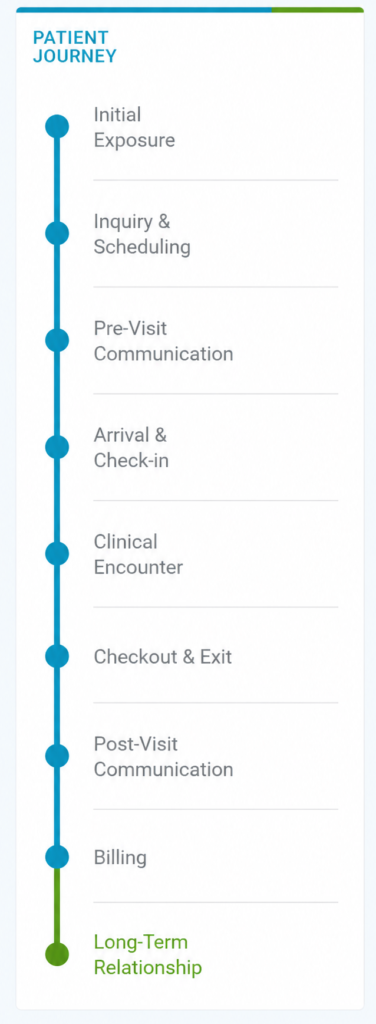
Patient Journey
Initial
Exposure
Inquiry &
Scheduling
Pre-Visit
Communication
Arrival &
Check-in
Clinical
Encounter
Checkout & Exit
Post-Visit Communication
Billing
Long-Term
Relationship
What Is a Patient Experience Framework?
A patient experience framework is a structured way to look at every point where a patient interacts with your practice, from the first time they hear your name to the day they refer a friend. Instead of treating patient experience as a satisfaction score or a front-desk issue, a framework shows how each moment connects to the next.
The Nine Pillars of Patient Experience is HMCG’s framework for medical practices. It organizes the patient journey into three phases (pre-visit, visit and post-visit), eight touchpoints within those phases, and one long-term outcome: a lasting relationship built on trust, loyalty and referrals.
The framework is built for practice owners, administrators and practice managers who want to know where patients are slipping through the cracks and what to fix first. It works for independent practices, multi-location groups and specialty clinics alike, because every patient moves through the same three phases, regardless of specialty.
A Culture of Care built on:
Accountability
Compassion
Empathy
Collaboration
PHASE 1
Pre-Visit
Pillars 1-3
1
Initial Exposure
First impressions happen before the visit.
Your website, online reviews, Google Business Profile and referral relationships are the first version of your practice a patient meets. Outdated information, unanswered reviews or a website that’s hard to use on a phone send a message before you’ve said a word. Strong practices treat their online presence as part of the front desk: accurate, current and welcoming.


2
Inquiry & Scheduling
Access is experience.
If patients can’t reach you, they won’t choose you. Long hold times, full voicemail boxes and scheduling that takes several calls all push patients toward the practice down the street. This pillar looks at phone handling, online scheduling, response times and how easy it is to get a first appointment.
3
Pre-Visit Communication
Clarity reduces anxiety.
Patients don’t just want reminders; they want to feel prepared. Clear instructions on what to bring, where to park, what forms to complete and what the visit will cost cut no-shows, late arrivals and front-desk bottlenecks. Good pre-visit communication answers questions before patients have to ask them.

PHASE 2
Visit
Pillars 4-6
4
Arrival & Check-In
The waiting room is a trust checkpoint.
A warm greeting, a clean space and a smooth check-in set the tone for the rest of the visit. Delays happen, but silence during delays feels like indifference. Practices that tell patients how long they’ll wait, and why, keep their goodwill even on busy days.

5
Clinical Encounter
Connection matters as much as care.
Patients remember how they felt, not just what was said. Eye contact, listening without rushing, plain-language explanations and a clear plan for next steps turn a clinical appointment into a relationship. This pillar looks at how the whole care team, not only the provider, communicates in the exam room.

6
Checkout & Exit
Clarity drives follow-through.
Confusion at checkout leads to lost compliance. Patients should leave knowing their next appointment, their orders or referrals, what they owe and who to call with questions. A rushed or unclear exit undoes much of the good work done in the exam room.

PHASE 3
Post-Visit
Pillars 7-8
7
Post-Visit Communication
The experience doesn’t end when they leave.
Test results, care instructions, referral updates and a simple check-in call show patients that the practice is still paying attention. Slow results, unreturned portal messages and referrals that go nowhere are some of the most common reasons patients lose confidence in a practice.

8
Billing
Transparency protects trust.
A confusing or surprising bill can undo an otherwise great experience. Clear cost estimates up front, easy-to-read statements, flexible payment options and staff who can explain a balance calmly all keep the financial side of care from damaging the relationship.

9
Long-Term Relationship
Retention. Trust. Referrals.
This is the result of everything. When the eight touchpoints across all three phases are delivered with consistency and care, patients don’t just return; they become advocates for your practice. Long-term relationships show up as higher retention, stronger online reviews and more word-of-mouth referrals.

About the Nine Pillars Framework
The Nine Pillars of Patient Experience was developed by Melissa Gilkes-Smith, founder of Healthcare Management Consulting Group (HMCG), drawing on 18 years in healthcare operations. It grew out of a simple observation: practices often measure patient satisfaction after the visit but rarely look at the full journey that shaped it.
HMCG uses the framework in every patient experience engagement, from the free PX360 assessment to a full Nine Pillars audit. Learn more about HMCG.
Consistency Builds Trust.
Pre-Visit
Visit
Post-Visit
Long-Term Relationship
• FREE • NO OBLIGATION
Introducing
PX360
The Patient Experience 360° Assessment
9
Pillars assessed
36
Questions total
<5
Minutes to complete
0
Cost or obligation
Scored 0–100 overall with a pillar-by-pillar breakdown
Personalized strengths and priority gaps identified
Actionable recommendations for your lowest-scoring areas
Report sent to you — reference it anytime
FREE ASSESSMENT

How strong is your patient experience?
Take the free 5-minute assessment and find out exactly where your practice stands — and what to do about it.
No account required - instant results
Takes less than 5 minutes
Frequently Asked Questions
What are the Nine Pillars of Patient Experience?
The Nine Pillars are HMCG’s patient experience framework: eight touchpoints across three phases of care (pre-visit, visit and post-visit) plus one long-term outcome, a lasting patient relationship. Together they map the full patient journey, from first search to final bill.
Why does a medical practice need a patient experience framework?
Without a framework, practices tend to fix whatever complaint came in last. A framework shows where problems actually start, often well before the visit, so you can prioritize the changes that will improve retention, reviews and referrals most.
How is patient experience different from patient satisfaction?
Patient satisfaction measures how patients felt about a visit after the fact. Patient experience is everything that produced that feeling: access, communication, the clinical encounter, billing and follow-up. Improving the experience is what moves satisfaction scores.
How do I know which pillar my practice should work on first?
Start with the free PX360 assessment. It takes less than five minutes, scores your practice from 0 to 100 across all nine pillars and highlights your lowest-scoring areas with recommendations.
What is a Nine Pillars Audit?
A Nine Pillars Audit is a deeper review led by HMCG. We look at each touchpoint in your practice, identify the gaps that matter most and give you a prioritized plan to close them. Schedule a free consultation to learn whether an audit is the right fit.
Want an expert to walk your practice through the Nine Pillars?
A 30-minute conversation could be the start of something remarkable.